Copywriting · 23 September 2024 · Fiona Freeman
What Can Copywriters Learn From Screenwriters?
From Bridgerton to Bond, screenwriting's structural instincts still beat anything a prompt can generate. Here's what copywriters can borrow.
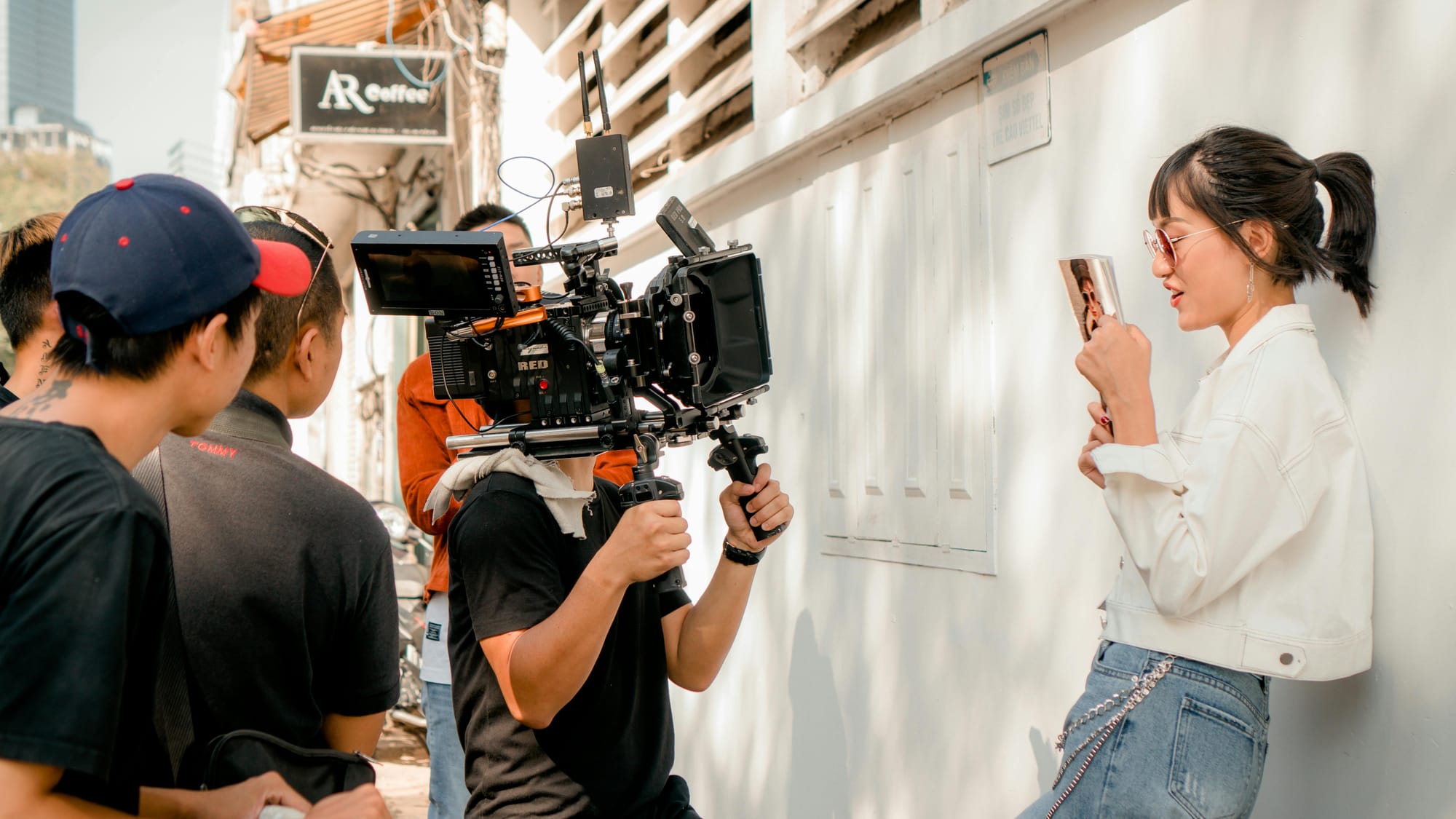
From Bridgerton to Barbie, some of the most-watched television and film of the last few years is a masterclass in structure. Here’s what binge-watching box sets and blockbusters can teach a copywriter — lessons that, if anything, matter more now that a first draft is one prompt away and the craft is in everything around it.
Several of these ideas trace back to Lucy V Hay’s workshop ‘Screenwriting Tips for Novelists’ at the Bournemouth Writing Festival.
1. Dive into the action
Don’t spend ages setting the scene; get straight to the point. Put the most interesting and important message first to earn your reader’s attention, then keep them there with copy that pulls them forward rather than copy that explains itself.
2. Line up a logline
Every film or series has a logline: a one- or two-sentence description built to hook. Writing a good one is a specific skill — like copywriting, it means finding the single most compelling idea in a story and cutting everything that isn’t it.
Tip: next time you’re writing an article or a product description, start by drafting a logline for it first. If you can’t write one, you probably don’t know your own key message yet.
3. Use special effects
On screen this means visuals; on the page it means the same instinct applied to language — rich, specific description that puts a picture in the reader’s head, or a well-placed image or diagram that does in a glance what three paragraphs would take to explain in a technical document.
4. Plot backwards
Before you put pen to paper, know where you want to land. Decide on the ending or the call to action first, then work purposefully towards it — nothing kills momentum in copy like a writer who doesn’t yet know what they’re building towards.
5. Team up
Plenty of great television and film is co-written — Friends had a writers’ room built around Marta Kauffman and David Crane; No Time to Die carries four credited writers, including Phoebe Waller-Bridge brought in specifically to sharpen tone. Get your colleagues involved. Set up a shared draft, and bounce ideas off each other until the copy holds up under someone else’s eye — which, in an age when a first pass can come from a machine, is exactly the step it’s tempting to skip.
6. Cut your darlings, out loud
Screenwriters famously read scripts aloud in the room before they lock them, because a line that reads well on the page can die the second it’s spoken — too many syllables, a rhythm that trips the tongue, a joke that needs a beat it doesn’t get. Copy works the same way. Read your draft aloud, or better, get someone else to read it to you: you’ll hear the sentence that’s secretly two sentences fighting each other, and the line that sounded clever when you wrote it and just sounds odd now.
The one thing a machine can’t do here
All five of these are structural instincts, built from watching thousands of hours of professionally edited storytelling and noticing what the editors cut. An AI tool can draft a paragraph, but it has no equivalent of a writers’ room, no editor cutting a scene that isn’t earning its place, and no sense of an audience getting restless. That’s still a human job, and it’s arguably the most valuable part of the craft left standing.
Why structure still beats a prompt
It’s worth being precise about why these lessons transfer and a generic “write me a blog post” prompt doesn’t produce the same result. A screenwriter’s structural instincts come from constraint — a two-hour runtime, a budget, an audience that will walk out if the first ten minutes drag — and from an editor whose entire job is cutting anything that isn’t earning its place. A generic AI draft has no runtime to hit and no editor pushing back on it; left alone, it tends towards the average length and the average structure for the prompt it was given, which is exactly the opposite of what a logline, a plotted-backwards ending or a ruthless first cut are for. The five habits above are really one habit wearing different hats: decide what the piece is for before you write a word of it, and be willing to cut anything, however well-written, that isn’t serving that purpose.
Ready to write a smash hit?
If you’re looking for copywriting support, our creative team can help with everything from Instagram posts to white papers, in the language your audience actually reads in. Contact us to find out more.